
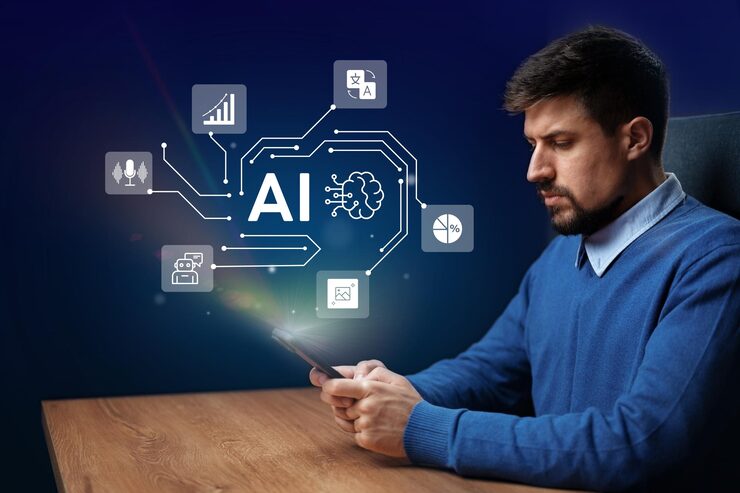
AI technology basics are essential for anyone looking to grasp how modern machines are becoming smarter and transforming industries. From self-driving cars to virtual assistants, artificial intelligence is reshaping how we live and work.
Understanding AI does not require advanced technical knowledge. By learning the fundamentals, anyone—from students to business professionals—can appreciate how AI works, its applications, and its potential impact on the future.
What is AI Technology?
Artificial intelligence is the science of creating machines capable of performing tasks that typically require human intelligence. AI technology basics include understanding how machines process data, learn patterns, and make decisions autonomously.
AI systems use algorithms to analyze data, identify patterns, and provide insights or predictions. These algorithms can be simple, like rule-based systems, or complex, like deep learning networks that mimic neural connections in the human brain.
Types of AI
AI is broadly categorized into three types: narrow AI, general AI, and superintelligent AI. Narrow AI is designed for specific tasks, such as language translation, facial recognition, or voice assistants. General AI, still theoretical, would possess the ability to perform any intellectual task humans can do. Superintelligent AI, a futuristic concept, would surpass human intelligence across all domains.
By understanding AI technology basics, individuals can differentiate between current AI capabilities and potential future developments, avoiding hype and focusing on practical applications today.
Machine Learning and Deep Learning
Machine learning is a subset of AI that allows machines to learn from data and improve over time. Deep learning, a more advanced form, uses neural networks to process complex data such as images, audio, and video.
These technologies enable applications like recommendation systems, autonomous vehicles, and medical diagnostics. Understanding how machine learning and deep learning work is key to grasping AI technology basics and how businesses leverage AI to gain competitive advantages.
Real-Life Applications of AI
AI is everywhere in modern life. Virtual assistants like Siri and Alexa help with daily tasks. E-commerce platforms use AI to recommend products based on browsing history. Healthcare relies on AI for diagnostics, predicting patient outcomes, and drug development.
In finance, AI detects fraud, analyzes investments, and manages risks efficiently. Smart home devices adjust energy usage and improve comfort. Learning AI technology basics helps individuals understand these applications and their potential benefits.
Advantages of AI Technology
AI offers multiple advantages, including efficiency, accuracy, and scalability. Machines can process vast amounts of data faster than humans, reducing errors and saving time. Automation improves productivity in industries such as manufacturing, logistics, and customer service.
AI-driven insights help businesses make better decisions and predict market trends. In healthcare, AI supports personalized treatment plans. Understanding these benefits is part of mastering AI technology basics for both personal and professional use.
Challenges and Ethical Considerations
While AI brings many advantages, it also presents challenges. Bias in data, job displacement, and privacy concerns are significant issues. Ethical AI development is essential to ensure fairness, transparency, and accountability in decision-making.
Learning AI technology basics includes recognizing these challenges and understanding how organizations address them through regulations, guidelines, and responsible AI practices.
How AI Transforms Industries
AI is transforming industries by automating routine tasks, providing data-driven insights, and enabling innovation. In retail, AI predicts consumer behavior and optimizes inventory. In agriculture, AI monitors crop health and predicts yields. In transportation, autonomous vehicles promise safer and more efficient travel.
Understanding AI technology basics allows professionals to identify opportunities, improve processes, and develop strategies that integrate AI effectively.
Tools and Platforms for Learning AI
Several platforms help beginners understand AI, including online courses, tutorials, and coding environments like Python and TensorFlow. AI experimentation with these tools strengthens knowledge and practical skills.
By starting with foundational concepts, learners can gradually progress to advanced applications, building competence in AI development and implementation.
AI in Daily Life
From chatbots that answer customer queries to smart recommendations on streaming services, AI is embedded in everyday experiences. Learning AI technology basics helps individuals use these tools effectively, make informed choices, and adapt to a technology-driven world.
Even personal finance apps, health trackers, and home automation systems rely on AI to provide personalized insights, saving time and enhancing convenience.
Future of AI Technology
The future of AI promises even greater transformation. Emerging areas include natural language processing, generative AI, robotics, and AI-driven creative tools. Businesses and individuals who understand AI technology basics are better positioned to leverage these innovations responsibly.
AI will increasingly assist in decision-making, creativity, and problem-solving across sectors, making AI literacy essential for staying competitive.
Tips for Learning and Applying AI
Start by mastering the fundamentals of AI concepts, algorithms, and applications. Experiment with beginner-friendly projects and gradually move to real-world scenarios. Stay updated with research papers, industry news, and AI developments.
By understanding AI technology basics, learners can contribute to ethical AI solutions, develop innovative applications, and enhance professional skills.
Read also: